What Is MOQ? A Guide For New Sportswear Brands.
The single term that determines whether a first-time brand can actually afford to launch a design — explained plainly.
Published — True Fit Sportswear Team
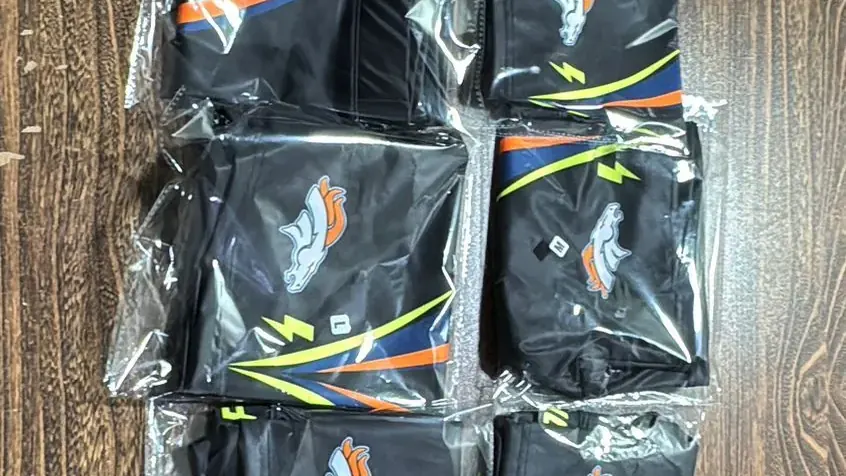
A finished bulk order, sized and individually bagged, ready to ship.
MOQ Means "Minimum Order Quantity"
MOQ is the smallest number of units a manufacturer will produce in one run of a single design. For custom sportswear it is normally counted per style, so a factory with a 50-piece MOQ will make at least 50 of each design you order. At True Fit the bulk MOQ is 20 pieces per style, and samples have no minimum at all.
Quote a factory for less than its MOQ and one of two things happens: it turns the order down, or it quotes a much higher per-unit price to make the run worth the setup effort.
Why Factories Set An MOQ At All
Cutting fabric, setting up a print or sublimation run, and preparing a production line all cost roughly the same whether you order 10 units or 500. Three costs sit behind most minimums:
- Fabric. Mills usually sell by the roll, and custom-dyed or custom-knit fabric often has its own minimum length. A small order still has to absorb that cost, or the factory has to hold leftover fabric.
- Setup. Pattern and cutting layouts, screens for each print color, embroidery digitizing and sublimation print set-up are all done once per design, however few pieces follow.
- Line changeover. Threading machines, adjusting for a new fabric and training operators on a new construction takes time before the first good piece comes off the line.
Below a certain quantity, the setup cost per unit becomes too high for the factory to produce profitably, so it sets a floor. The MOQ is that floor.
Typical MOQs You'll Run Into
Bulk MOQs vary widely between factories, and many set them well above 20 pieces per style, particularly for sublimated or heavily decorated garments, where the setup is greatest. Our own bulk MOQ is 20 pieces, deliberately set low because many of the brands we work with are placing their first-ever order and can't commit to a large quantity on a design they haven't sold yet, whether that's a full teamwear kit or a smaller gym wear capsule.
Treat any quoted MOQ as the start of the conversation. The same factory may quote a lower MOQ for a simple, single-color t-shirt in stock fabric than for a fully sublimated jersey in custom-dyed fabric, because the setup is very different.
Samples Are A Different Number Entirely
Don't confuse a bulk MOQ with a sample. A sample is a single unit (or small handful) produced to confirm fit and fabric before you commit to the bulk quantity. Many factories apply no MOQ to samples, and at True Fit samples have zero MOQ, even for one piece. You pay a sample fee instead of committing to a quantity, and it takes 8–10 days. Our sample page and custom sportswear samples guide explain what to send and what to check.
What To Ask A Manufacturer About MOQ
- Is the MOQ per style, per color or per size? (Per color or per size is a much higher real commitment.)
- If I change only the color, does that count as a new style, or can colors share one minimum?
- Does a lower MOQ come with a per-unit price penalty?
- Is there any MOQ at all on samples?
- Is the MOQ the same for every decoration method, or does it change for sublimation, print or embroidery?
- Is the MOQ confirmed on the written quotation, so it can't shift between the chat and the invoice?
Ordering across a mixed youth and adult roster? See our youth vs. adult sizing & MOQ guide for how the 20-piece minimum applies across a real team's size spread.
MOQ Per Style, Not Per Order
This is the detail that catches new brands out most often. A 20-piece MOQ per style means you can order 20 units of Design A and, separately, 20 units of Design B in the same order. You don't need 40 units of one design to hit two style minimums. That matters if you're launching with a small capsule of two or three designs rather than one: your real minimum commitment is 20 pieces per design, not a combined total across the whole order.
It is also counted per style, not per size. A 20-piece order of one hoodie design can be split across sizes to match your customers. For example, 3 small, 6 medium, 6 large, 4 extra-large and 1 double-extra-large. You are not required to order 20 of every size.
How MOQ And Price Move Together
A lower MOQ doesn't automatically mean a lower per-unit price. It usually means the opposite, since the same fixed setup cost (cutting, print or sublimation setup, line changeover) is being spread across fewer units. This is exactly why many manufacturers refuse to go low: below their threshold, the economics stop working without raising the price. A floor of 20 pieces keeps the minimum small enough for a first-time brand while still keeping the per-unit price reasonable.
In practice, the more pieces of one design in a run, the more the setup cost is shared, so the unit price tends to fall as quantity rises. Pricing for your exact spec is always confirmed in a written quotation. For what drives the numbers, see our manufacturing cost guide.
Low MOQ Does Not Mean Anything Goes: Custom vs. Stock
Be careful when you see offers of an MOQ of one or two pieces for a "custom" garment. That usually means the seller is decorating stock items that already exist, such as blank tees with your print on top. That is a legitimate model, but it is a different product from a garment cut, stitched and finished to your own pattern, fabric and fit. Knowing which one you are buying matters for pricing, quality and how much of the product is truly yours. Our guide to private label vs. white label explains the difference, and our private label, OEM and ODM page shows the ways we can make garments for your brand.
If 20 Pieces Still Feels Like A Lot
Start with fewer designs rather than asking a factory to go under its MOQ. One well-tested design at 20 units, sold or gauged for demand, tells you more than three untested designs at a lower quantity each, and it keeps your unit price honest instead of paying a small-batch penalty on top of an already-small order. A few other ways to keep the first commitment small:
- Choose one color first and add colorways on your reorder, once you know which sells.
- Pick a simple, proven product such as a tee or hoodie before a technical one.
- Use samples, not a small bulk run, to test fit and fabric, as samples have no minimum.
- Plan the second order early. Once a design is on file, repeating it is quicker; see how to reorder custom sportswear.
If you genuinely only need a handful of units to test fit and fabric before deciding anything, that's what the zero-MOQ sample stage is for. See our production timeline guide for how sampling and bulk fit together, and our guide to starting a sportswear brand for the full path from idea to first sale.