
Rugby League And Union Jerseys That Survive A Winter Of Tackles.
Australia plays two rugby codes side by side. Rugby league is the stronger one in New South Wales and Queensland, while rugby union runs through club competitions in the same states and beyond, with a heavy school presence in several of them. Both are winter sports, and both are hard on a jersey. A shirt that looks fine on a hanger can lose a collar or open a side seam by round five, so we treat the stitching as the main product and the colour scheme as the finish.
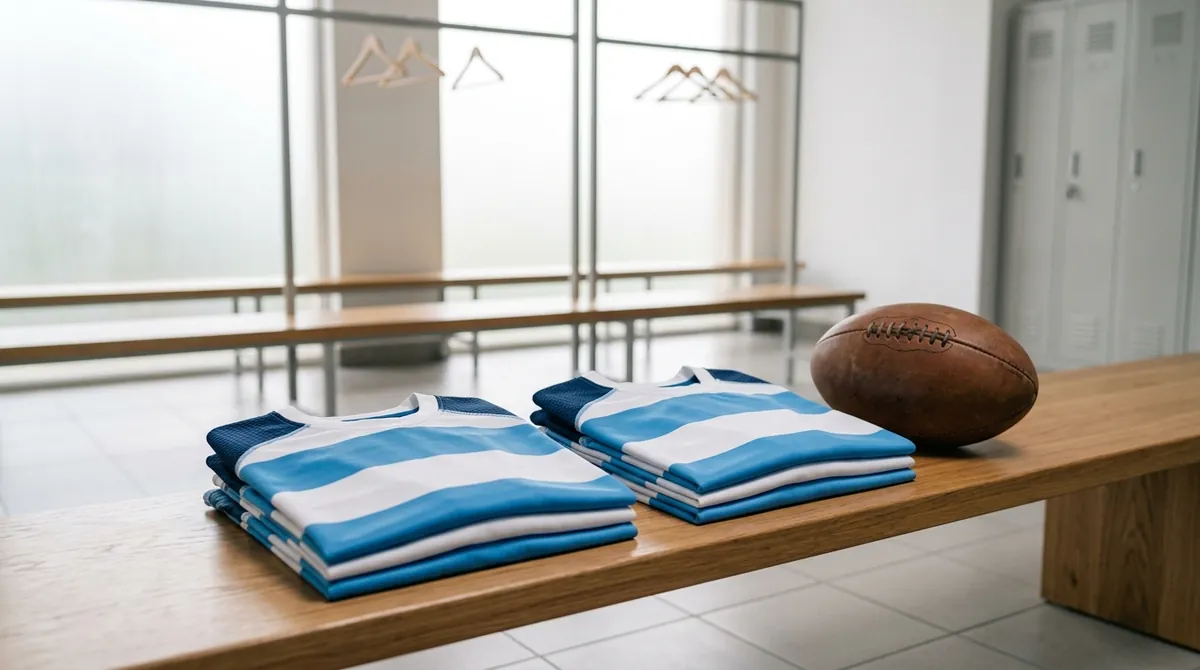
Rugby League
Thirteen players on the field, with the numbers on the back usually following position and interchange players wearing higher ones. Club seasons generally run from around March or April through to August or September, depending on the state and the grade. Junior leagues are organised by age group, so one club often needs several size runs in a single design.
Rugby Union
Fifteen a side, with numbering again tied to position and a bench of replacements. Club competitions are run state by state, and a number of schools field union teams as a main winter code. The sevens format, played with seven a side at pace, is popular in the warmer months and wants a lighter, cooler shirt.
The Four Places A Rugby Jersey Fails First.
We agree each of these on the sample, because they are cheap to fix at that stage and expensive to discover after a bulk run.
Side Seams
Opponents grab at the torso, so the side seams carry the load. We use reinforced stitching here, and we check where the artwork meets each seam.
Collar
A collar that grips well on the field can also tear. We choose a collar that sits flat, resists stretching out, and is stitched firmly enough for repeated pulling.
Hems And Cuffs
Sleeve cuffs and the bottom hem take constant tugging. A double-stitched finish keeps them from curling or unravelling.
Fabric Weight
Heavy enough to hold its shape, light enough to breathe. Northern-state pre-seasons are hot, so we also discuss a lighter training weight.
From Match Jersey To Training Singlet.
Most clubs start with the match jersey and shorts, then add an alternate set, long socks, a training singlet for the sessions that run before sundown, and a base layer for cold southern evenings. Touch football and sevens teams usually ask for a lighter shirt, which we cover in the questions below. Coaches often add training bibs in a contrasting colour so a squad can split into sides at practice.
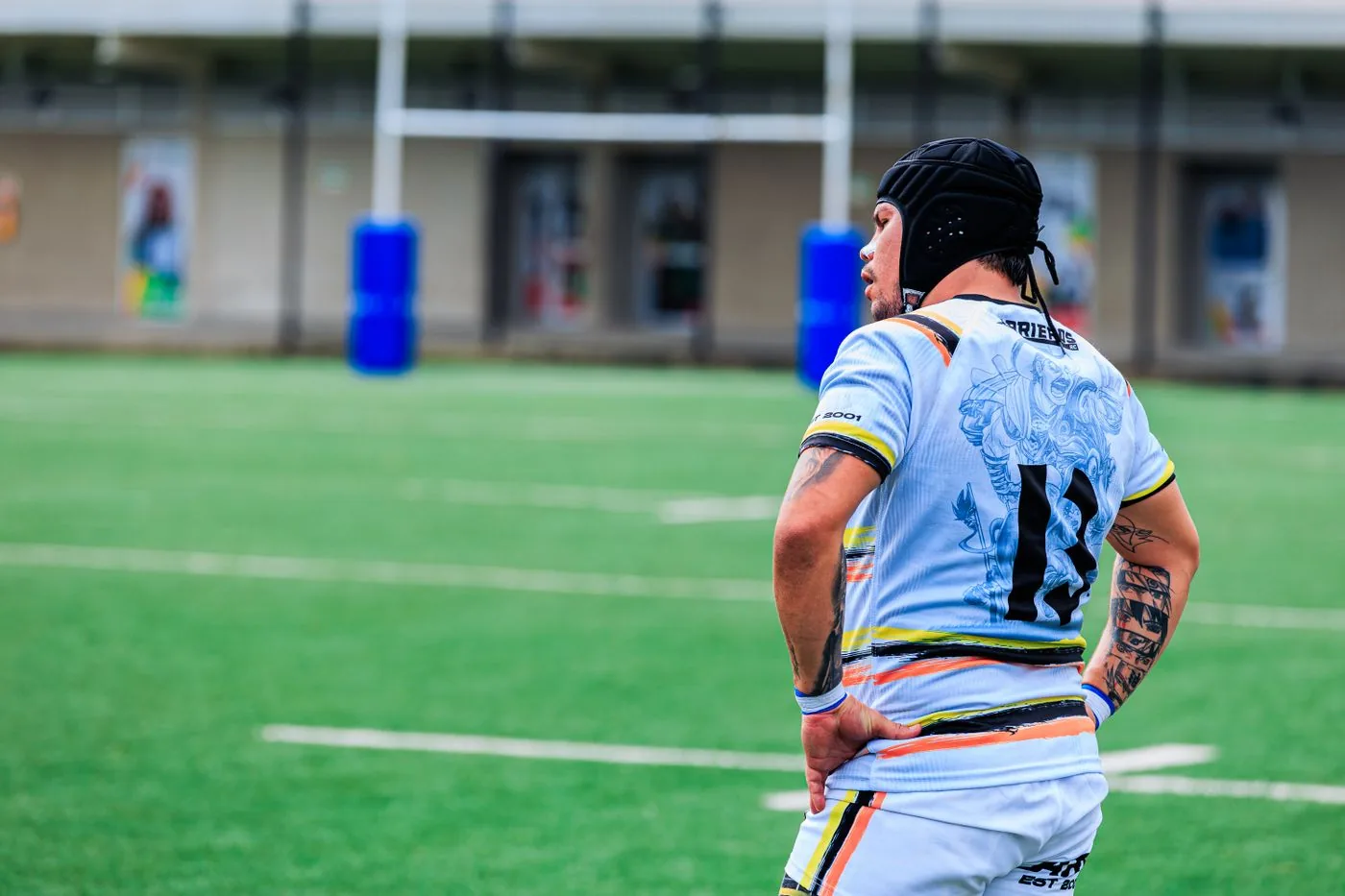
Jerseys are normally sublimated, which means stripes, hoops, chevrons and a sponsor panel are all printed in one pass and the club can change its design year to year without new tooling. Where a competition expects a particular placement for a sponsor or a number, send us the handbook with the design and we will match the artwork to it.
Club colour matching is worth a conversation of its own. A traditional maroon, a bottle green or a gold can look different on screen than on fabric, and a shade that suits one polyester can look flat on another. We start from a reference such as a Pantone code or a photo of your existing jersey, and approve the colour on the sample, not on a screen.
Order In The Summer For A Winter Kick-Off.
Summer: Decide
While cricket is on, the rugby committee settles the design, sponsors and the new-season colours. Early decisions leave room for a second sample round if a collar or a shade needs another look.
Autumn: Produce
The sample takes about 8–10 days, and bulk takes about ~18 days after approvals. Freight and customs clearance are separate and not guaranteed, so allow generous slack before round one.
Winter: Reorder
Squads grow and injuries happen. Because we already hold your approved design, a mid-season top-up is a short conversation. See our reorder guide.
More detail on fabric and construction is on the rugby category page. For how we inspect before packing, see quality control, and for a first piece to try, order a sample.
Your order gets its own private page with photos and a working-day countdown, and nothing is cut until you approve the design. See how order tracking works, or look at the guernsey page if your club also runs a footy side.
Common Questions.
Do you make for both rugby league and rugby union clubs?
Yes. The construction conversation is similar for both codes: seams, collar, hems and fabric weight. What differs is the numbering convention and the squad size, so tell us which code and which competition you play in and we will set the shirt up to match.
Can a club order juniors and seniors in one go?
Yes. One order can run from small junior sizes up to adult. The 20-piece bulk minimum counts per design or style across all sizes, not per size, so a club with several age groups in the same jersey can combine them.
Do you make touch football and sevens kit as well?
Yes, as lighter builds. Touch football is a non-contact game and sevens is played at a faster tempo, so both usually suit a lighter fabric and a less armoured seam than a full-contact match jersey. Tell us the format and we will suggest the right weight.
What if our competition has rules about colours or sponsor placement?
Send us the rule or the competition handbook with your design. We cannot read your association's rules for you, but we can adjust the artwork and placement so the sample matches whatever you are required to wear.
How does the order get to Australia, and what about duties and GST?
A courier chosen by True Fit carries the goods, and the price we quote is shipping-included. Customs duties, GST and any local taxes are separate and depend on value and category, so check current Australian Border Force and ATO rules for your shipment.
Can we pay by card?
No. We do not take card payments; orders are paid by bank transfer or Wise transfer. Our verification page shows how to confirm the business before you pay.
More Australian Sport Pages.
Sports
Cities
Read Before You Order.
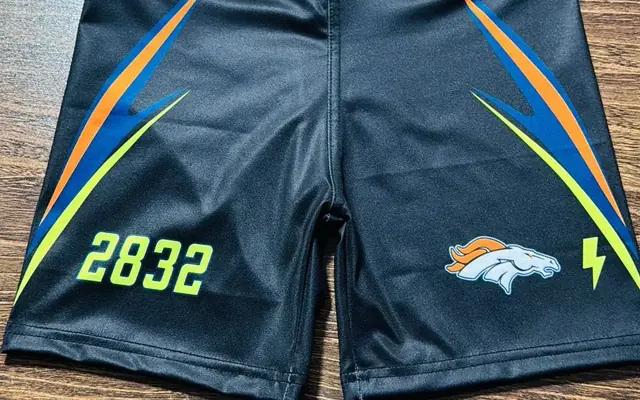
Quality Control Checklist For Custom Sportswear Orders
A reusable stage-by-stage checklist, from fabric to packing, plus what evidence to ask for and how to sign off an order.
Read More →
GSM And Fabric Weight Guide For Custom Activewear
What GSM measures, typical weight ranges for tees, jerseys, leggings and hoodies, and how to brief a factory on fabric.
Read More →
Custom Sportswear Samples: What To Expect
Why to sample before bulk, what to send, how long it takes, how the sample fee credit works, and how to give feedback.
Read More →